Leading brands that work with us









Archive wide
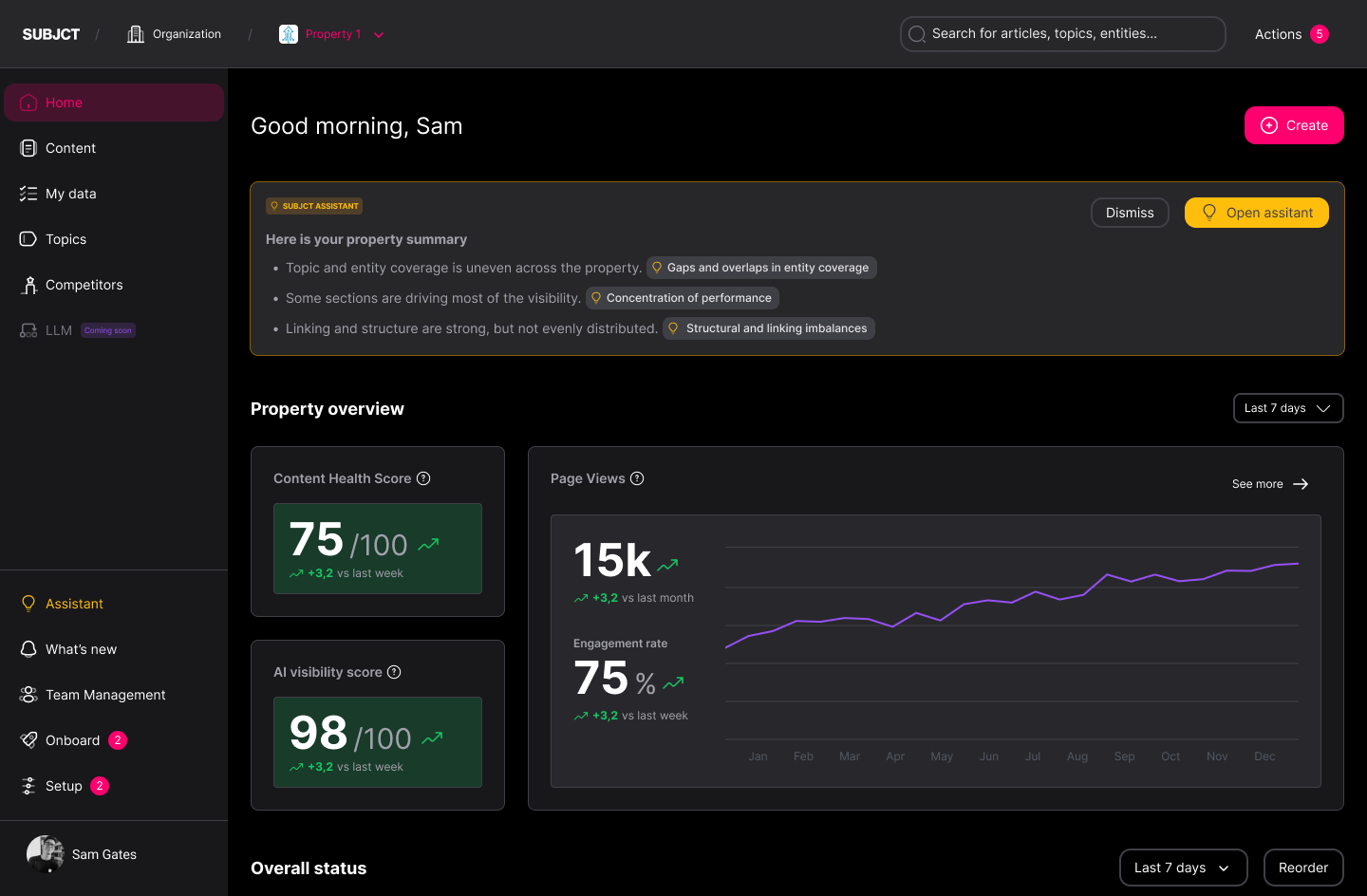
Your whole archive, vectorised and structured.
Tagging, linking and marking up tens of thousands of URLs usually falls to one person with scripts. SUBJCT vectorises and structures your entire archive, every passage included.
Vectorise every passage
Every article and every passage embedded, mapping tens of thousands of URLs by meaning in a single pass.
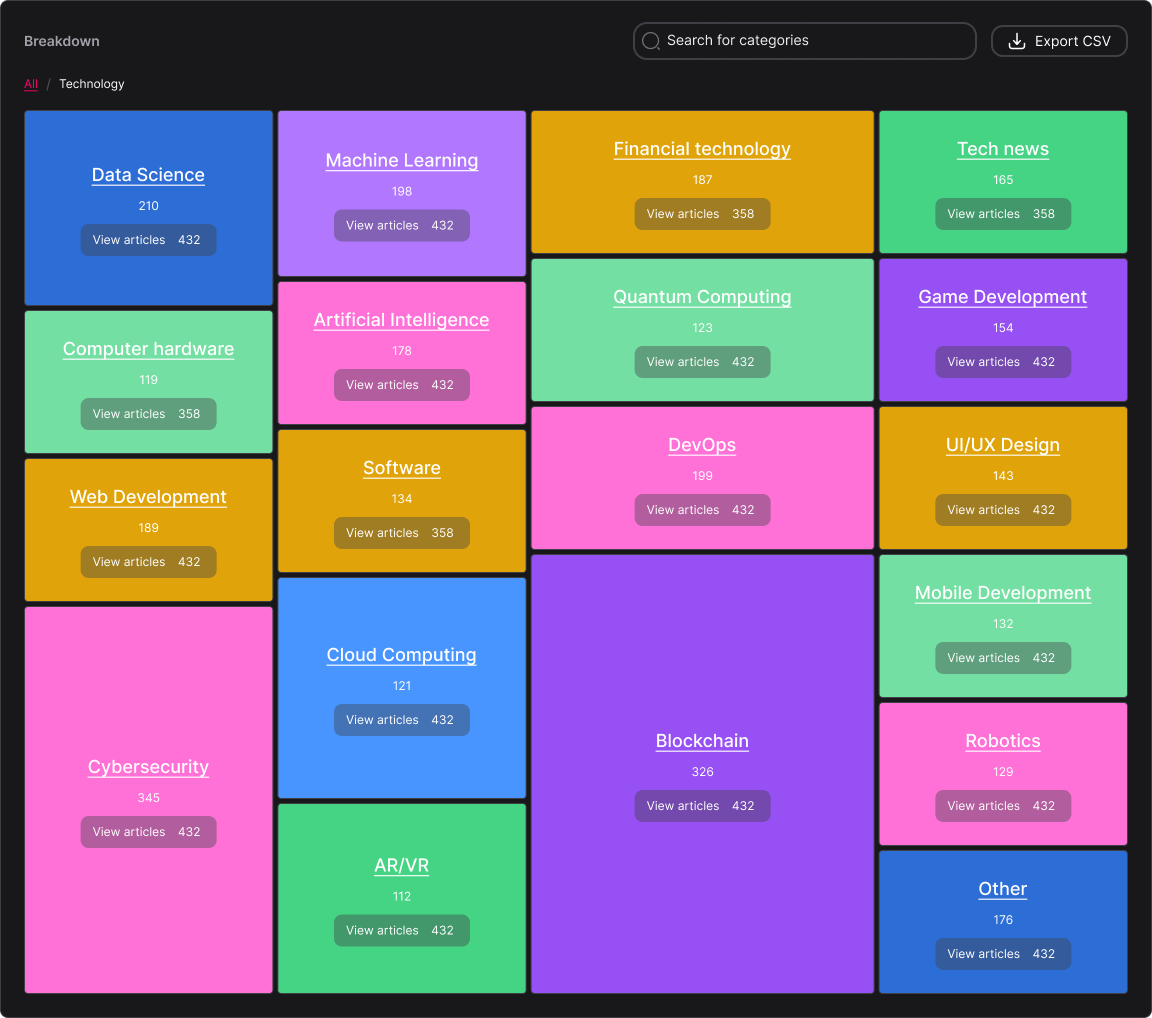
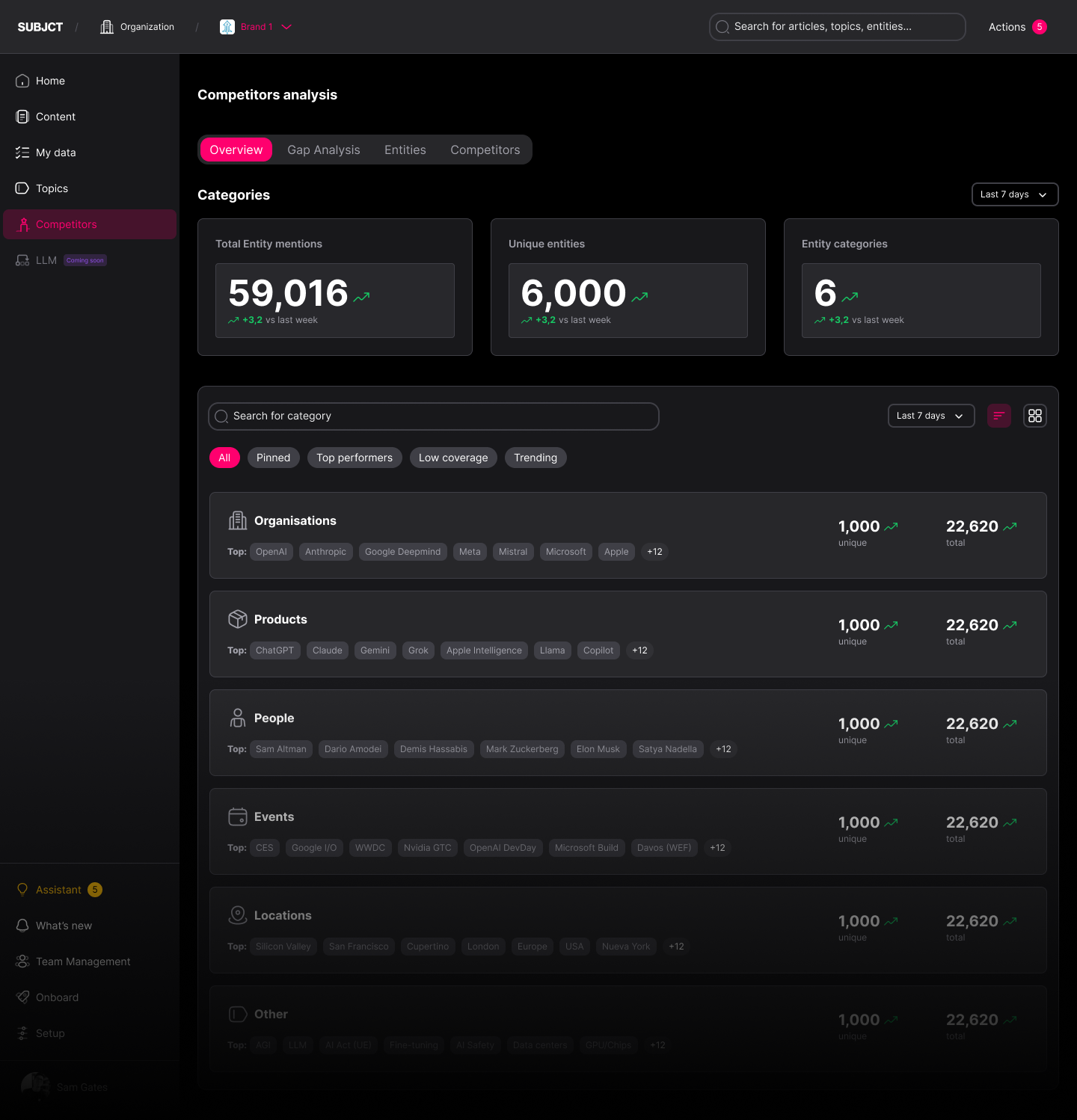
Tag every entity
Every organisation, person, product, place and event tagged, showing where your coverage leads competitors.
Link and describe
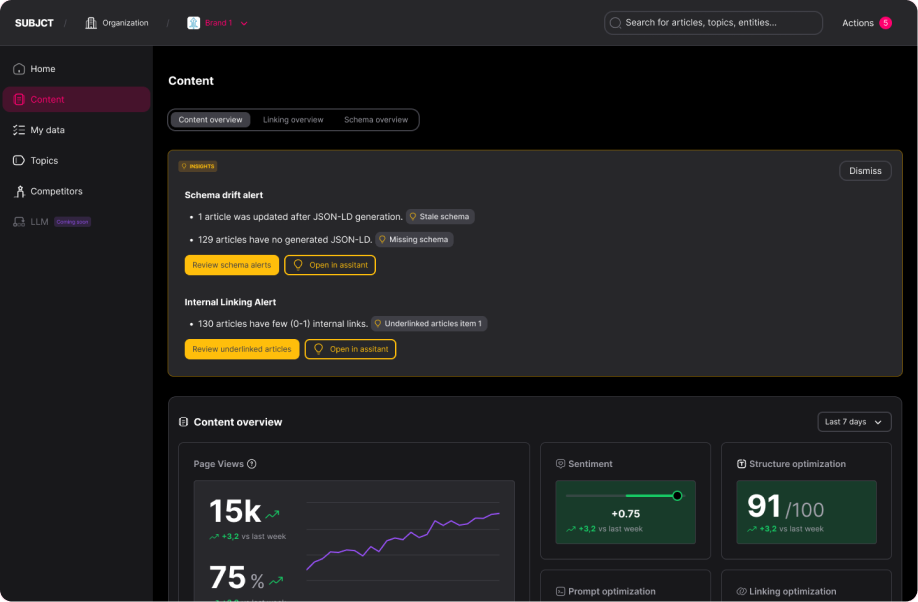
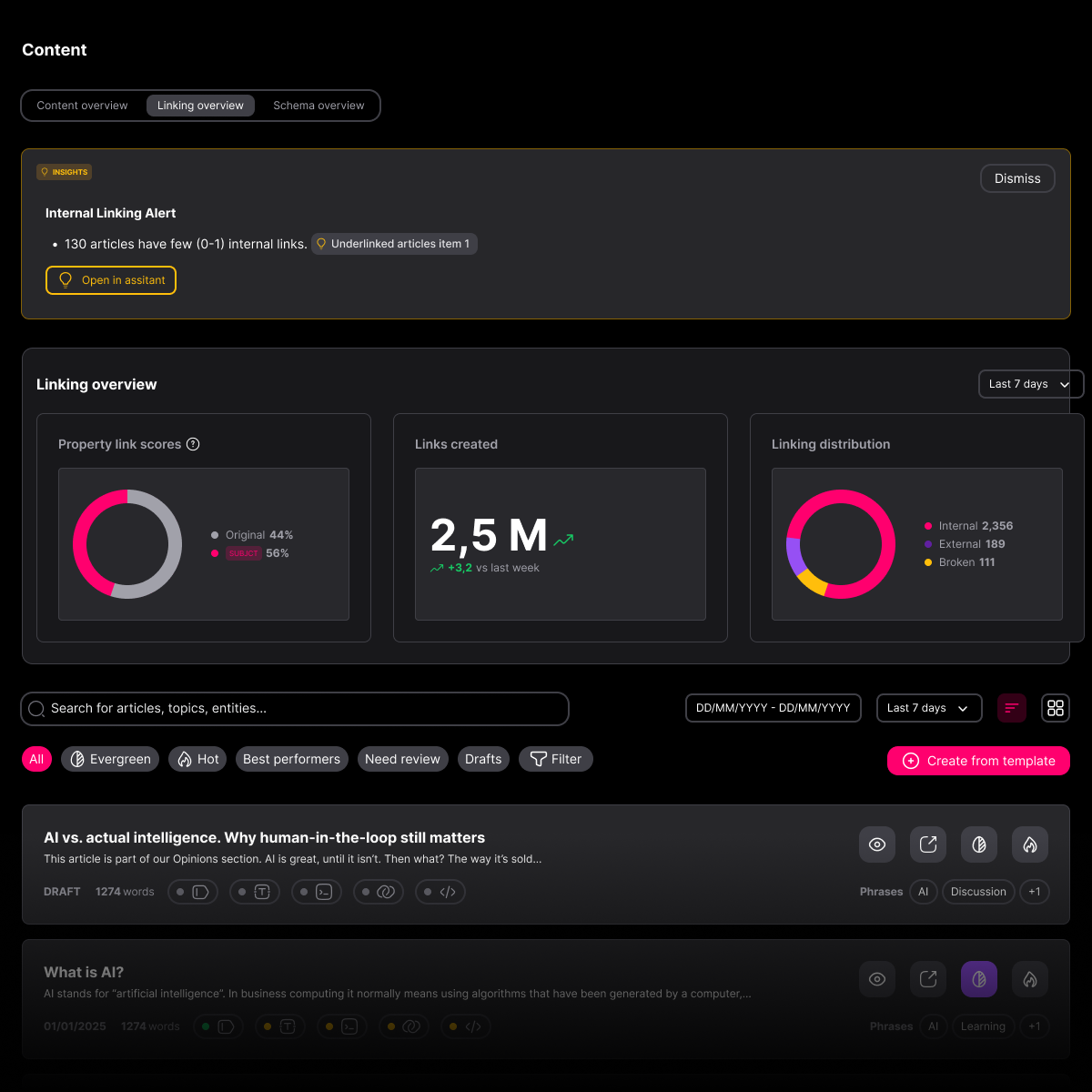
Meaning matched links and JSON-LD schema implemented on every page. Every link stays editable.
Returns
Build it once. Get three returns.
Once your whole archive is mapped by meaning, every article you've already paid for works harder for search, audience and commercial teams, with no editorial effort.
Cited in AI search
AI engines can read, connect and cite the expertise you've published.
Deeper reading on site
Passage level embeddings power recommendations and semantic search, so readers find the next article.
Sellable content segments
Related entities surfaced as you write, so you build topical depth before you publish.
Deployment
Fits the stack you already run.
Entities, embeddings, links and schema arrive through the API or MCP server as granular, structured data your team controls, with no taxonomy to build first.
REST API
Pull entity data, tags, links, schema and semantic search into any CMS, warehouse or content pipeline.
MCP server
Access tags, links and analysis from MCP-compatible AI assistants and agents.
Always current
Related entities are surfaced as you write, so you build topical depth before you publish your content.
Ready to see your own archive structured as data?
Bring a few URLs; we'll analyse them live.
Frequently asked questions
What does SUBJCT do?


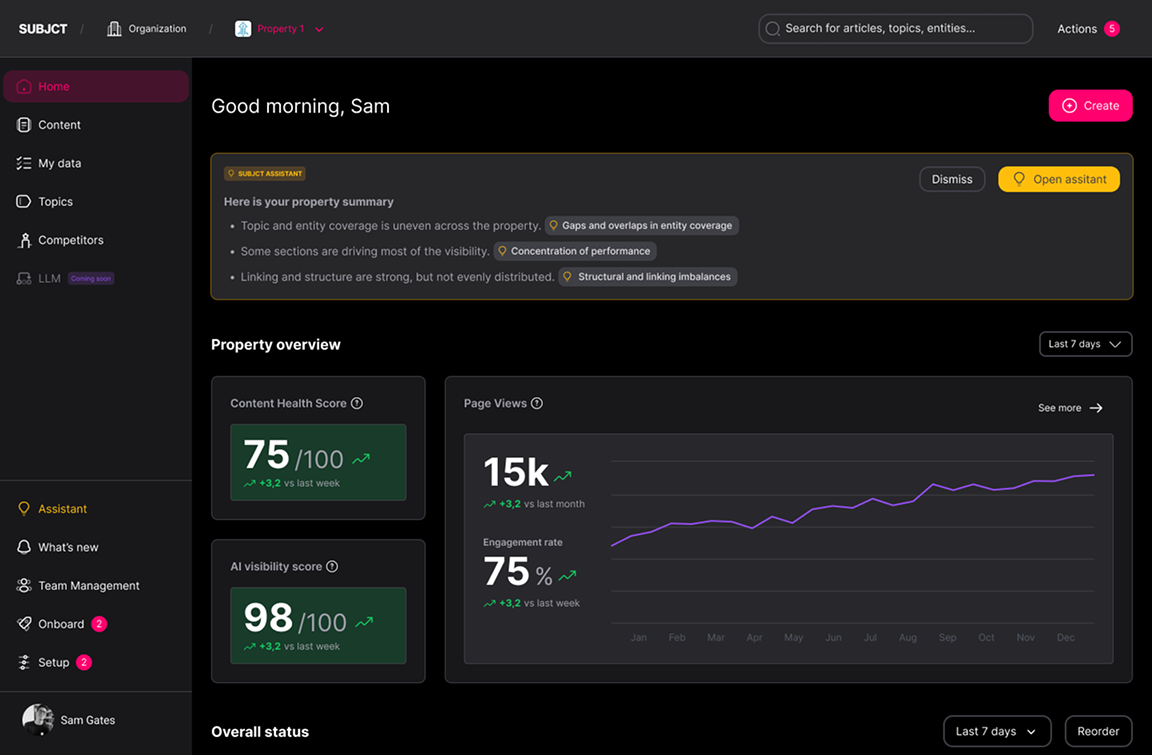
SUBJCT automates the content structure work that determines whether AI search engines can find, read and cite your content: internal linking, JSON-LD schema generation, entity tagging, entity analysis and prompt scoring.
Does SUBJCT generate content?
No. SUBJCT optimises the structure, tagging, linking and schema JSON-LD of content your team has already written or is creating. The words themselves stay entirely human. SUBJCT is built around human-in-the-loop content; it makes what you've written perform better, it doesn't replace the writing of it.
Does SUBJCT work with WordPress?
Yes. SUBJCT has a WordPress plugin that brings automated linking and schema generation directly into the CMS. For headless and custom CMS architectures, SUBJCT integrates via API.
Is SUBJCT a tracking tool?
No. SUBJCT is built around optimisation, not visibility tracking — it structures your content so AI engines can read and cite it, rather than only reporting on how visible you already are.
What's the difference between SEO and GEO (Generative Engine Optimisation)?
Traditional SEO optimises for rankings, clicks and sessions in classic search results. GEO optimises for whether an AI engine — ChatGPT, Perplexity, Google AI Overviews — can understand your content well enough to cite it directly in a generated answer.
How large a content archive can SUBJCT handle?
SUBJCT is built for publisher-scale volumes — from a few hundred pages to millions. Archive ingestion runs as a single automated pass via the Configuration settings or the API, so volume isn't a barrier to getting started.
Do I need to manage tagging myself?
No. SUBJCT applies entity tags automatically, with custom labelling solutions available. There's no manual coding or taxonomy work required to get a fully structured archive.

Still have questions?
Can’t find the answer you’re looking for? Please chat to our friendly team.
Get in touch
SUBJCT
Get in touch