Leading brands that work with us









Archive wide
Your whole archive, vectorised and structured.
Tagging, linking and marking up tens of thousands of URLs usually falls to one person with scripts. SUBJCT vectorises and structures your entire archive, every passage included.
Vectorise every passage
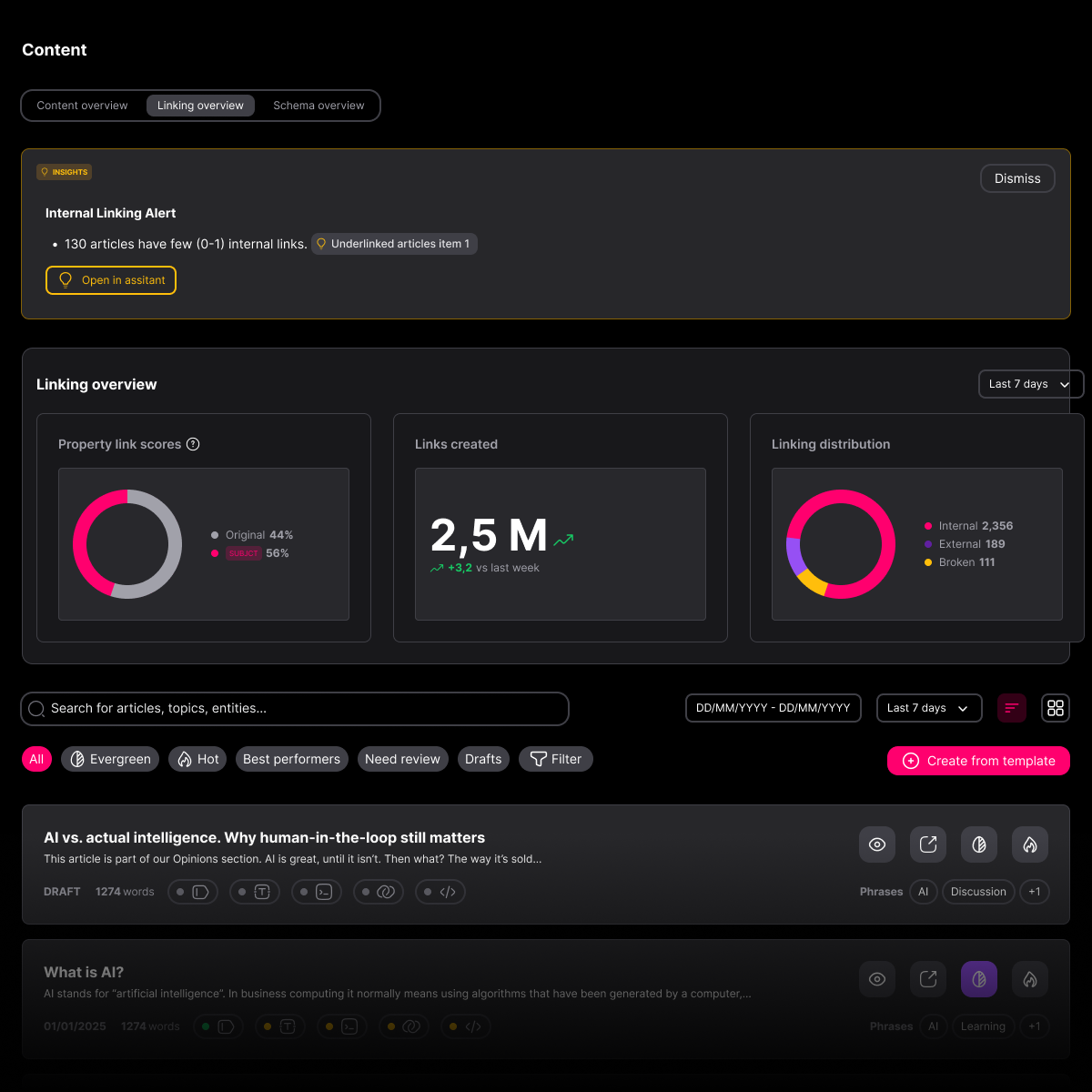
Every article and every passage embedded, mapping tens of thousands of URLs by meaning in a single pass.
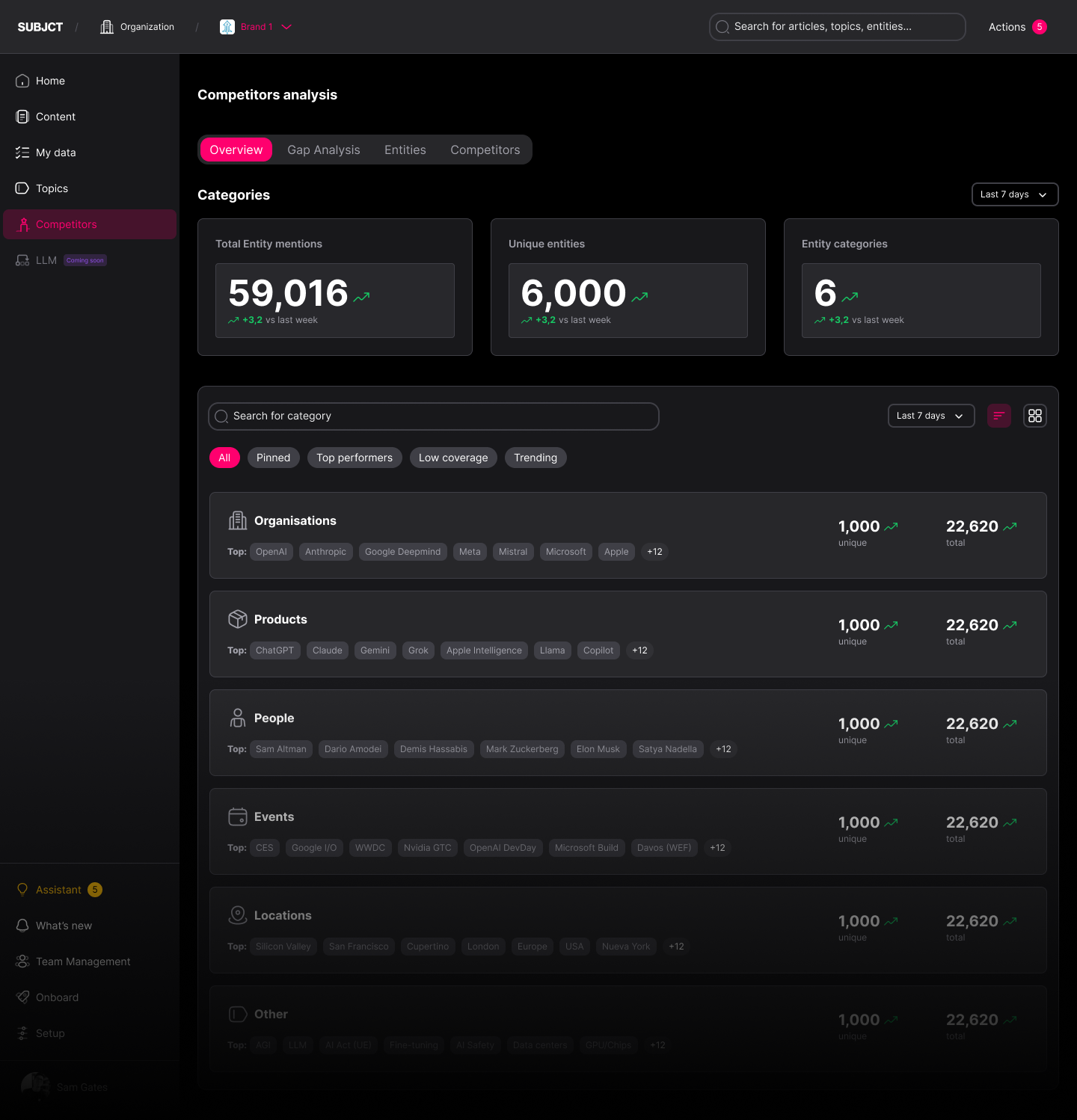
Tag every entity
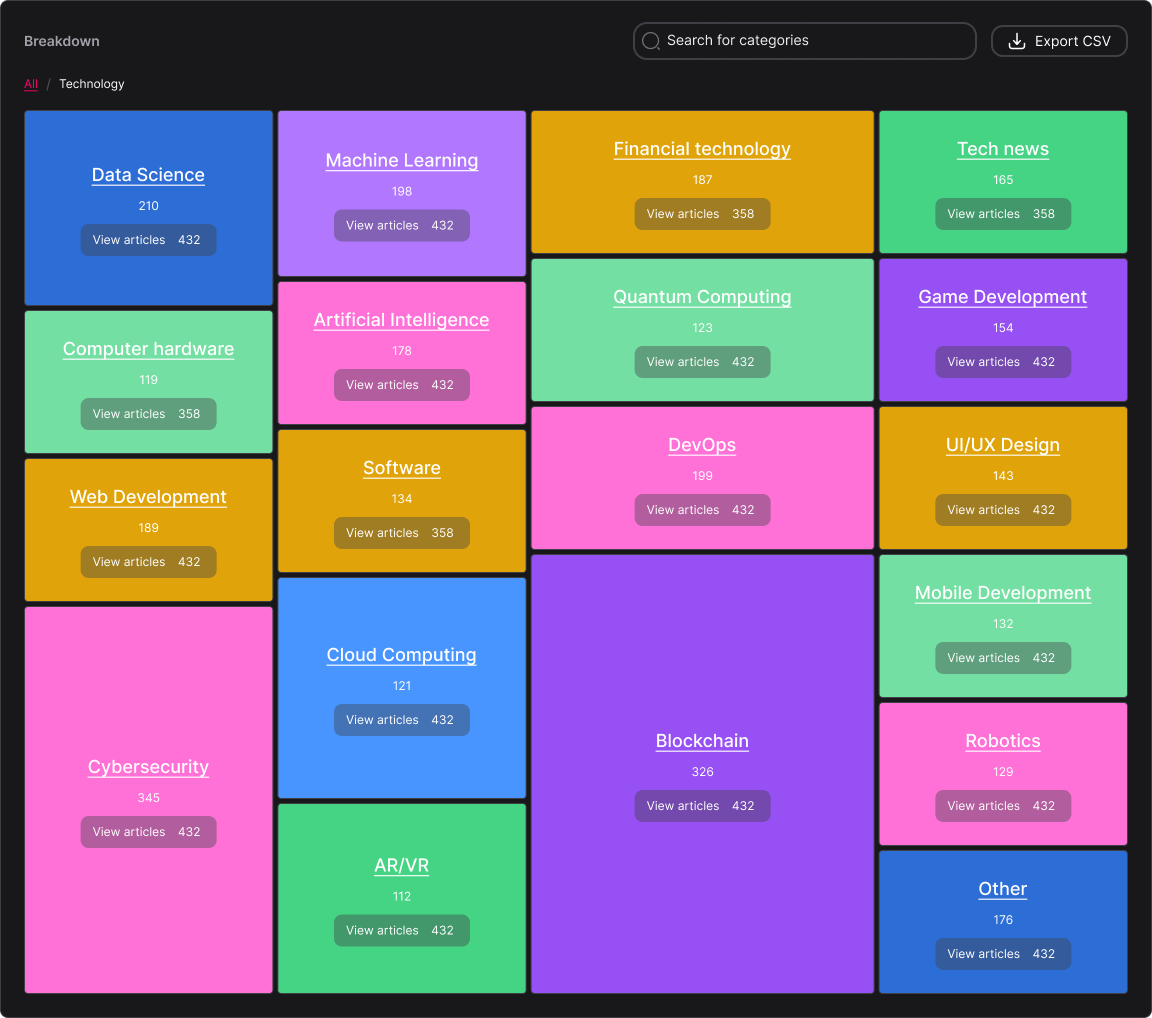
Every organisation, person, product, place and event tagged, showing where your coverage leads competitors.
Link and describe
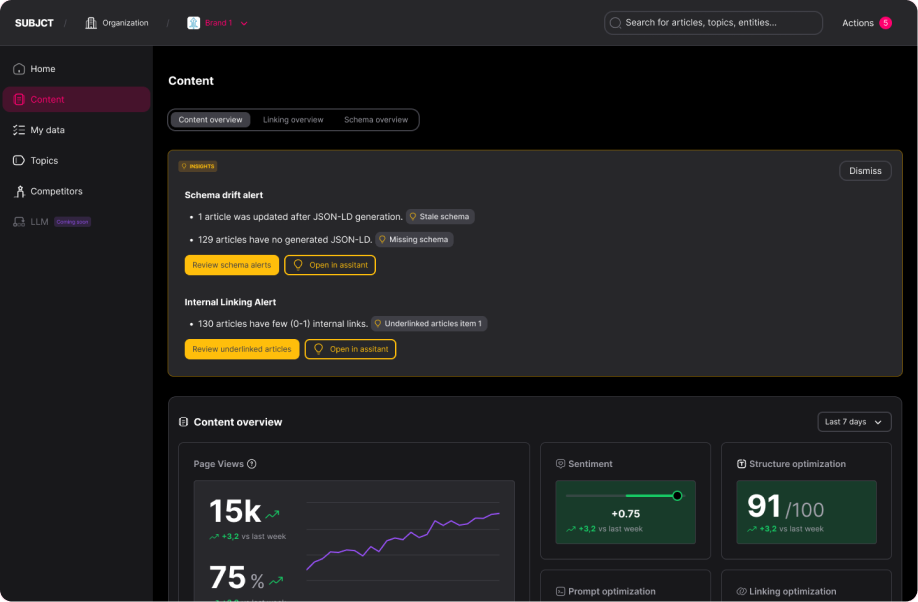
Meaning matched links and JSON-LD schema implemented on every page. Every link stays editable.
Returns
Build it once. Get multiple returns.
Once your whole archive is mapped by meaning, every article you've already paid for works harder for search, editorial, development and commercial teams.
Classic & AI search
Maximise your topical authority and the value of the expertise you've published.
Deeper reading on site
Passage level embeddings power recommendations and semantic search, so readers find the next article.
Sellable content segments
Entity data and semantically related articles flow via the API into your data management platform for campaigns.
Deployment
Fits the stack you already run.
Entities, embeddings, tags, links and schema arrive through the API or MCP server as granular, structured data your team controls.
REST API
Pull entity data, tags, links, schema and embeddings into any CMS, warehouse or content pipeline.
MCP server
Access tags, links and analysis from MCP-compatible AI assistants and agents.
Always current
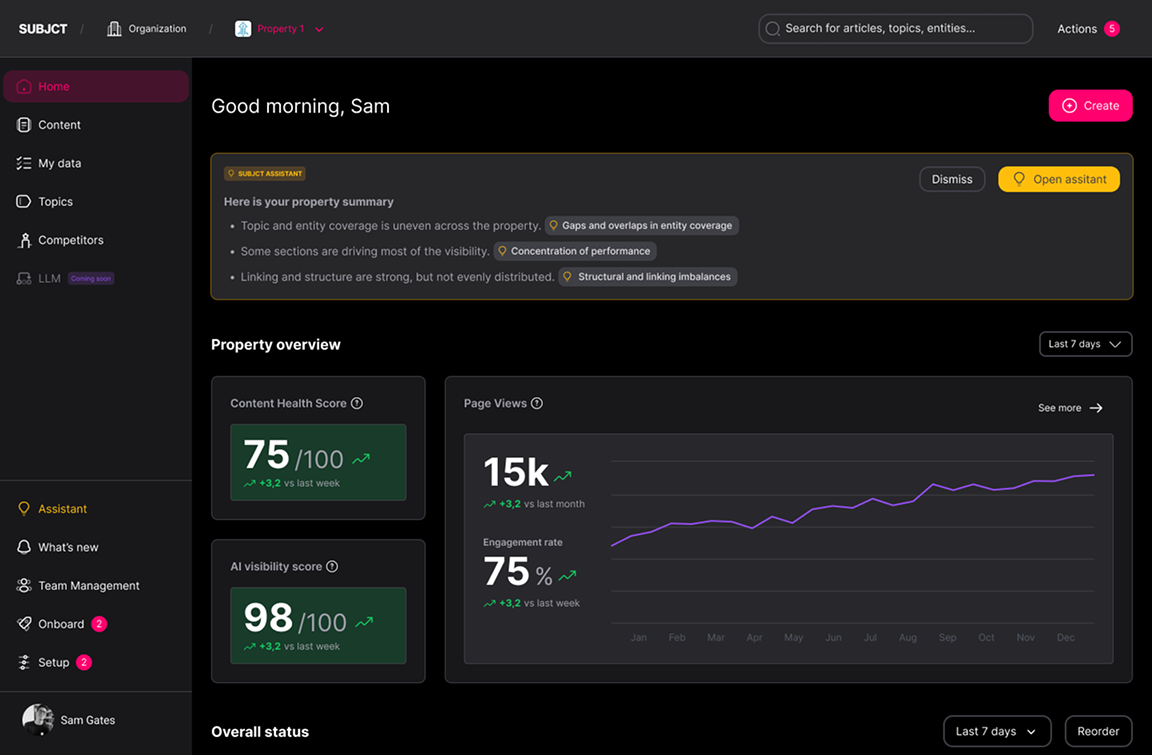
Related entities are surfaced as you write, so you build topical depth before you publish your content.
Ready to see your own archive structured as data?
Bring a few URLs; we'll analyse them live.
Frequently asked questions
What does SUBJCT do?


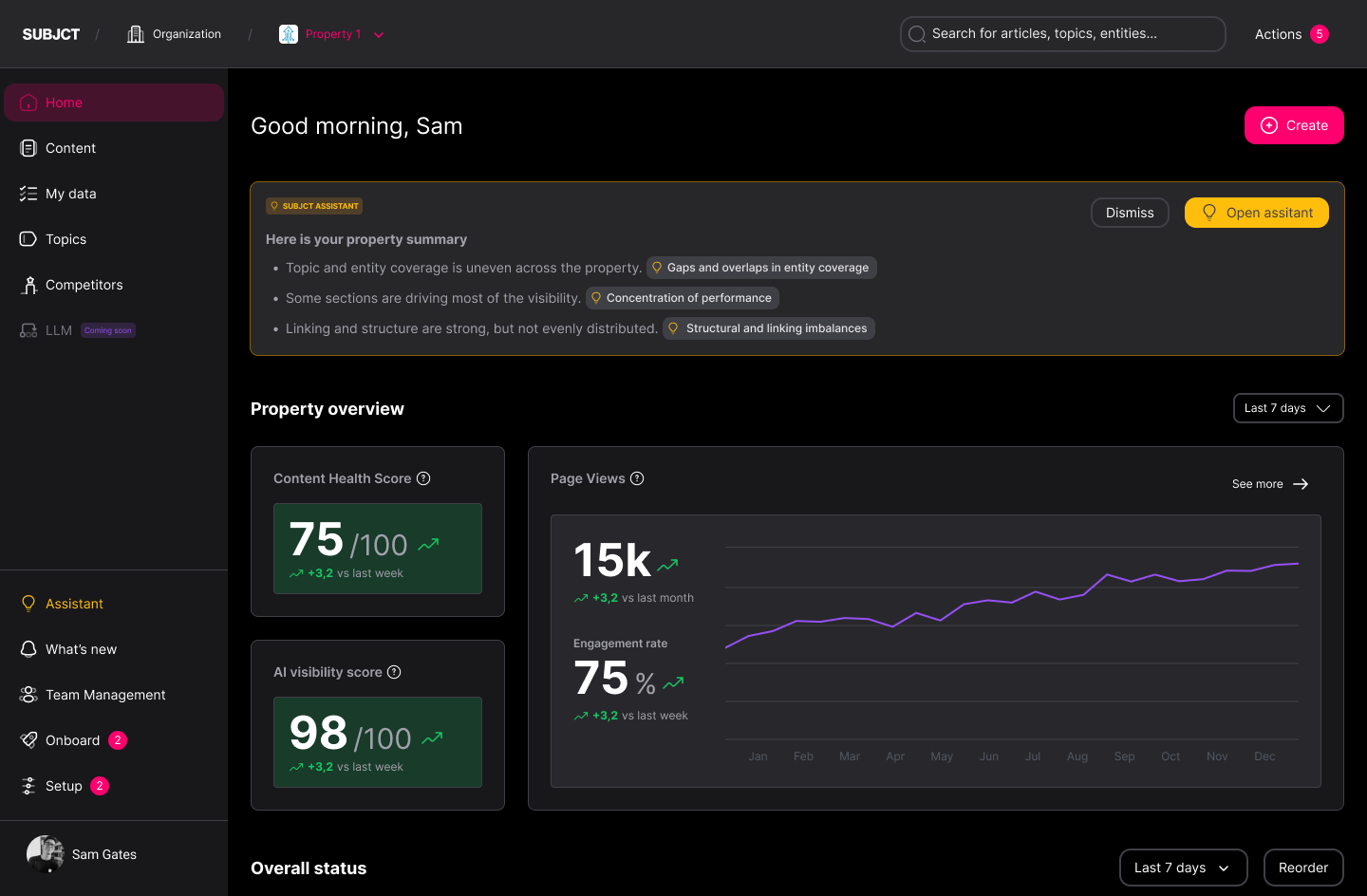
SUBJCT automates the content structure work that helps 'classic' and AI search engines discover and understand your content: internal linking, JSON-LD schema generation, entity tagging, entity analysis and prompt optimisation.
Does SUBJCT generate content?
No. SUBJCT optimises the structure, tagging, linking and schema JSON-LD of content your team has already written or is creating. The words themselves stay entirely human. SUBJCT is built around human-in-the-loop content; it makes what you've written perform better, it doesn't replace the writing of it.
How does SUBJCT fit our existing stack?
Through the REST API or the MCP server. Output arrives as granular, structured data your team controls, so it fits headless, custom and existing content stacks.
Can our team search the archive by meaning?
Yes. Semantic search, powered by article and passage embeddings, is live in the SUBJCT web app and available through the API.
How does archive-wide processing work?
SUBJCT ingests your full archive once, tagging, linking and marking up every URL in a single pass. After that, each new article is processed as it publishes.
How large a content archive can SUBJCT handle?
SUBJCT is built for publisher-scale volumes — from a few hundred pages to millions. Archive ingestion runs as a single automated pass via the Configuration settings or the API, so volume isn't a barrier to getting started.
Do we need to build a taxonomy first?
No. SUBJCT identifies the organisations, people, products, places and events in your content directly, so there's no taxonomy project before you see results. SUBJCT can support custom taxonomies, depending on specific requirements.

Still have questions?
Can’t find the answer you’re looking for? Please chat to our friendly team.
Get in touch
SUBJCT
Get in touch